
Make AI & Media Lighter.
Unleash their power with IDDO.
Restructures information to shrink working sets, bandwidth, and power. Maximizing value per byte. Development of novel Intelligent Data Density Optimization solutions powered by patented MSML
Advanced R&D. Media demos today. LLM Pilots Welcome.
Maximizing value per byte • $847B total addressable market • Reducing computing loads
Higher information density with preserved fidelity: pack more signal, drop the waste.
Lower latency, faster reactions: important pieces arrive first.
Energy efficiency: Reduces modern LLMs cost of energy per output.
Bandwidth reduction and Throughput increase: Aimed at brain-like massive parallelism "pre-training" by evolution and life-long learning.
Adaptation: Continually adapt online; LLMs are fixed post-training. They cannot truly plan or remember beyond their training.
Interpretability and Safety: Makes LLMs decision process more transparent, verifiable and accountable.

MSML Technology
Multi Structure Multi Layer data formalization - Advanced data density optimization that maximizes value per byte
What is MSML?
MSML (Multi‑Structure, Multi‑Layered data formalization) is a patented methodology for representing complex signals by factorizing them across structures and scales. In plain terms: we keep the meaning‑bearing components and minimize redundancies, so more intelligence fits into fewer bytes without losing what matters to human perception or machine understanding.
The principle behind everything: IDDO
Intelligent Data Density Optimization (IDDO) is the brand and operating principle built on our issued patents covering multi‑structural, multi‑level information formalization. Practically, it means factorizing signals so the parts that carry meaning are preserved and redundancies minimized. The result is higher information density without loss of semantic fidelity, shorter time‑to‑first‑word, lower bitrates at the same perceived quality, and fewer GPU cycles per task across audio, video, and multimodal datasets (including LLMs).
General Harmonics
We are a research corporation with solid scientific background that develops AI-powered Intelligent Data Density Optimization custom products and solutions. Our foundation rests on patented MSML (Multi-Structural, Multi-Level) principles – a method for factorizing complex data signals while preserving meaning and cutting redundancy.
MSML fundamentals are applicable across large arrays of market sectors, including AI and LLMs, Media, Telecom and Edge Computing, AV and Robotics and Autonomous systems. For each sector, we provide whitepapers outlining comprehensive use case analysis of the benefits, supported by an array of demonstrable digital products and solutions for the Media industry that provide solid technology validation ground.
MSML Intellectual Property Portfolio
MSML Data Density Optimization Pipeline
Input Data
Multi-Structure Analysis
Multi-Layer Processing
Density Optimization
Optimized Output
Learn More About MSML Technology

MSML-Powered Products & Services
Comprehensive portfolio of media market products and specialized IDDO solution development services
Pioneering field merging sound science with technological innovation to transform how individuals experience and interact with digital and physical environments. Bridges human perception and machine learning through MSML principles.
Key Features:
- AudioDNA for content recognition & fingerprinting
- Temporal synchrony for immersive experiences
- LDE content protection & authentication
- Multi-sensory data synchronization
- AI-driven audio analysis & optimization

Website Preview
Programmable Media Container with fidelity lossless codec for 3D Hi-Res audio and advanced metadata integration.
Key Features:
- STEMS for creators and producers
- Live Lyrics & Chord synchronization
- Data Steganography for content protection
- Cross-platform compatibility
- 21x data volume reduction

Website Preview
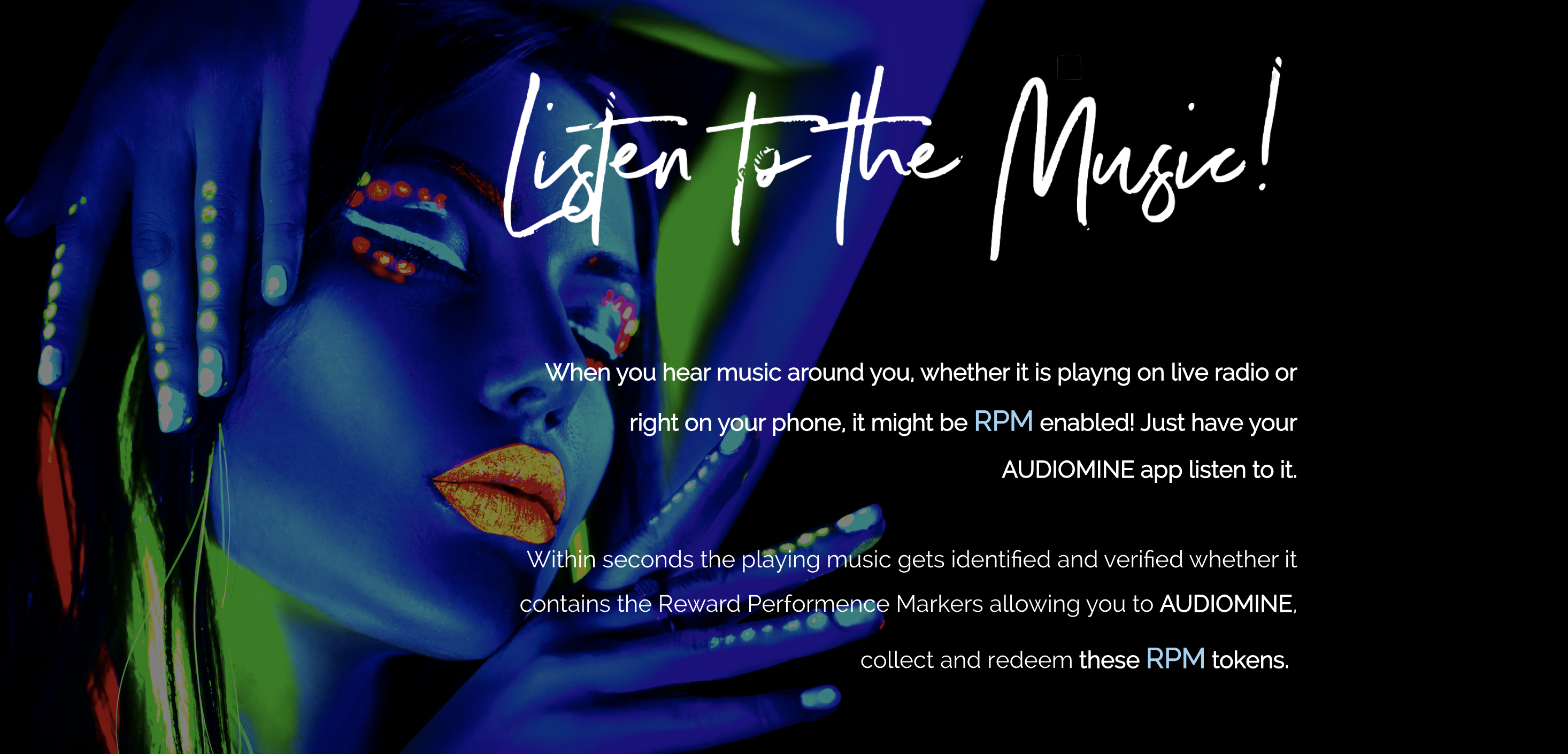
AI-powered cloud infrastructure platform with Attention Reward RPM Tokens and Intelligent Live Link Assistant.
Key Features:
- Content Module with smart cataloging
- AudioDNA Module for audio fingerprinting
- ArtAssets Module for multimedia management
- Revenue optimization algorithms
- Real-time analytics dashboard
Website Preview
Cognitive Dynamic Media Cloud with AI-driven media solutions and global distribution networks.
Key Features:
- Scalable server infrastructure
- Intelligent audio optimization
- Secure transmission protocols
- Edge computing capabilities
- API-first architecture

Website Preview
Artist Branded App Ecosystem with D9NAMIC media player and LIVELINK synchronization technology.
Key Features:
- Personalized artist applications
- Advanced fan engagement tools
- Real-time content synchronization
- Multi-platform distribution
- Monetization integrations

Website Preview
AI-powered conversational BI that transforms SAP BusinessObjects data into actionable insights. Natural language queries deliver instant answers with enterprise-grade security.
Key Features:
- Auto Web Intelligence report generation
- Natural language queries in plain English
- 10x faster time to insights (30 seconds)
- 90% reduction in IT reporting requests
- Unlimited users with no per-seat costs

Website Preview
Target Markets
MSML technology addresses critical challenges across multiple high-growth industries
Data Centres & Compute
AI & Large Language Models
Media & Content Delivery
Telecom & Edge Infrastructure
Autonomous Vehicles & Robotics
Energy & Smart Grid
Critical Data Centre Constraints
Modern data centres face a perfect storm: AI workloads demanding 10x higher power density than legacy systems, grid interconnect delays of 4-7 years, and cooling infrastructure consuming 30-40% of total energy. Inference workloads are projected to account for over 90% of AI lifecycle energy.
Exploding Power Density Requirements
AI accelerators and high-performance GPUs push rack densities to 21-50 kW, far exceeding traditional 5-10 kW designs. Data centre electricity consumption surged 17% in 2025 alone, with AI centres projected to triple power requirements by 2030.
Impact: Grid capacity bottlenecks; $400B in planned utility upgrades; 4-7 year interconnection queues limiting expansion
Thermal Management Crisis
Cooling infrastructure claims 30-40% of total data centre energy. 89% of operators with high-density racks now require liquid cooling. Water consumption in arid regions creates sustainability conflicts.
Impact: PUE degradation; unsustainable water usage; accelerated hardware degradation from thermal stress
AI Model Size and Bandwidth Demands
Large language models require massive parameter storage and transfer. 87% of operators anticipate needing 800 Gbps interconnects for distributed training. Inference workloads create bursty, unpredictable demand patterns.
Impact: Memory bandwidth bottlenecks; expensive high-speed interconnects; inefficient resource utilization during demand valleys
MSML Data Centre Optimization
MSML transforms data centre economics by dramatically reducing the computational, storage, and energy footprint of AI workloads through intelligent compression that preserves model performance.
AI Model Compression for Inference
MSML-LLMC framework compresses large language models through hierarchical multi-level optimization, reducing parameter counts while maintaining accuracy. Techniques parallel industry advances achieving 14x+ compression ratios.
Expected Result: Up to 300x model size reduction; inference on lower-tier hardware; 90% reduction in per-query compute requirements
Intelligent Workload Distribution
MSML enables heterogeneous deployment where compressed models handle routine inference at the edge, while complex queries route to full-scale cloud resources. Smart routing achieves dramatic efficiency gains over monolithic approaches.
Expected Result: Up to 16x efficiency improvement; reduced inter-facility bandwidth; lower latency for distributed inference
Thermal and Power Optimization
Compressed models generate less heat and consume less power per inference operation. MSML optimization reduces computational intensity, directly addressing the thermal density challenge.
Expected Result: 30-60% reduction in inference energy; lower cooling demands; extended hardware lifespan; improved PUE metrics
Critical Infrastructure Constraints
Power Density
AI accelerators demand 10x higher rack power density than traditional compute, overwhelming existing infrastructure.
Impact:
Grid capacity limits expansion
IDDO Solution:
MSML compression enables equivalent AI capability with significantly reduced computational and power requirements
Cooling Demands
Thermal management consumes 30-40% of facility energy. Liquid cooling adoption at 89% for high-density racks.
Impact:
Unsustainable operational costs
IDDO Solution:
Optimized models generate less heat per operation, reducing cooling load and enabling higher deployment density
Memory Bandwidth
LLM inference is memory-bound, requiring expensive high-bandwidth memory and interconnects.
Impact:
Hardware cost escalation
IDDO Solution:
MSML-compressed models reduce memory footprint, enabling deployment on standard hardware with lower bandwidth requirements
Inference Variability
AI inference creates bursty, stochastic workloads that challenge capacity planning and grid stability.
Impact:
Inefficient resource utilization
IDDO Solution:
Edge-deployable compressed models enable distributed inference, smoothing demand patterns across infrastructure
Interconnect Costs
Distributed training requires 800 Gbps wavelengths. Data transfer between facilities is a major cost driver.
Impact:
Network infrastructure bottlenecks
IDDO Solution:
Intelligent data density optimization reduces transfer requirements by up to 75% for model synchronization
Sustainability Pressure
Data centres face increasing scrutiny on carbon footprint and water consumption. Sustainability reporting is industry standard.
Impact:
Regulatory and reputational risk
IDDO Solution:
MSML efficiency gains directly translate to lower carbon per inference, supporting sustainability commitments
MSML Data Centre Intelligence
Expected Outcome
MSML-LLMC framework demonstrates potential for up to 300x model compression while maintaining inference accuracy above 99%
Applications:
Compressed models enable sophisticated inference at edge locations, reducing backbone bandwidth and improving response latency
Applications:
Higher model density per GPU through compression enables more efficient multi-tenant inference serving
Applications:
Direct correlation between compression ratio and energy savings, supporting carbon reduction commitments
Applications:
MSML Technology Benefits
- Up to 300x model compression
- 90% inference energy reduction
- Commodity hardware deployment
- Reduced cooling requirements
- Lower interconnect bandwidth needs
- Improved PUE metrics
Target Applications
- Hyperscale AI inference
- Edge data centres
- Enterprise AI deployment
- Multi-tenant AI platforms
- Sovereign AI infrastructure
- Sustainable computing initiatives
Targets & Validation
We publish targets—objectives pending validation—along with methods and acceptance thresholds so progress is transparent and reproducible.
Acceptance Threshold
≤0.5–1.0% Δ accuracy
Datasets
MMLU, GSM8K, MT-Bench
Hardware
NVIDIA A100, H100 GPUs
Baseline Techniques
Quantization (INT8/INT4), Pruning, Distillation
Method Outline
Hierarchical multi-scale decomposition with perceptive information value criteria applied to attention mechanisms and weight matrices.
Acceptance Criteria
Score within 0.5-1.0 percentage points of baseline on standard benchmarks
Acceptance Threshold
SSIM≥0.98 / ViSQOL≥4.0
Datasets
Standard audio/video test sets (BBC, EBU)
Hardware
x86 CPU clusters, ARM edge devices
Baseline Techniques
AAC, HEVC, Opus codecs
Method Outline
Multi-structural signal analysis preserving perceptual features while eliminating redundant information across frequency and temporal domains.
Acceptance Criteria
Perceptual quality metrics above specified thresholds in blind listening/viewing tests
Acceptance Threshold
Under bandwidth/power caps
Datasets
KITTI, nuScenes autonomous driving datasets
Hardware
NVIDIA Jetson, Qualcomm Snapdragon
Baseline Techniques
MobileNet, EfficientNet edge models
Method Outline
Edge-optimized model compression with dynamic adaptation based on available compute and network resources.
Acceptance Criteria
Latency improvement validated under constrained network/power conditions with maintained safety metrics
Every target includes detailed methodology, datasets, and hardware specifications
Scripts and containers will be published for third-party validation
Acceptance criteria defined before results are claimed
IP & Technology Assets
Comprehensive portfolio of patents, software modules, and brand assets
Patent Portfolio
IDDO foundation rests on issued world wide patents grants for multi‑structural, multi‑level information formalization. A preliminary Acoustic Intelligence set has been implemented to demonstrate and validate the fundamental advantages of MSML in real workloads; it serves as a reference pattern that can be extended or reconfigured for other modalities and data pipelines.
The fortification applications describe interfaces and methods that extend the baseline into media containers, entropy and transform pathways, provenance and synchronization controls, and programmable authenticity features. Together, the core and fortification filing ready applications provide a defensible base with optional follow‑on protections aligned to client-specific roadmap and jurisdictions.
Key Patents and Trademarks Grants
MULTI-STRUCTURAL, MULTI-LEVEL INFORMATION FORMALIZATION AND STRUCTURING METHOD, AND ASSOCIATED APPARATUS
View PatentSYSTEM, METHOD, APPARATUS, AND COMPUTER PROGRAM PRODUCT FOR CALCULATING A SAMPLED SIGNAL
View PatentFortification Patent Applications: Filing Ready
ADVANCED PHASE-LESS REPETITION CODING INTERFACE FOR MULTISTRUCTURAL, MULTI-LEVEL SOUND FORMALIZATION AND BITRATE REDUCTION SYSTEM AND METHOD USING THE SAME
ADVANCED PHASE-LESS REPETITION CODING INTERFACE FOR A MULTISTRUCTURAL, MULTI-LEVEL SOUND FORMALIZATION, AND BANDWIDTH AND BIT RATE REDUCTION SYSTEM AND METHOD USING THE SAME
LOSSLESS ENTROPY COMPRESSION INTERFACE FOR A MULTI-STRUCTURAL, MULTI-LEVEL SOUND FORMALIZATION, AND AUDIO BANDWIDTH AND BIT RATE REDUCTION SYSTEM AND METHOD USING THE SAME
AUDIO DATA LOSSLESS ACCELERATOR INTERFACE FOR A MULTI-STRUCTURAL, MULTI-LEVEL SOUND FORMALIZATION, AND ASSOCIATED SYSTEM AND METHOD FOR PROVIDING AN EXTRA COMPRESSION LAYER FOR A PREVIOUSLY REDUCED AUDIO DATA SET
AUDIO DATA ADVANCED ACCELERATOR INTERFACE FOR A MULTISTRUCTURAL, MULTI-LEVEL SOUND FORMALIZATION, AND ASSOCIATED SYSTEM AND METHOD FOR EFFICIENT AUDIO DATA STREAMING
AFFINE TRANSFORMS CODING INTERFACE FOR A MULTI-STRUCTURAL, MULTILEVEL SOUND FORMALIZATION, AND ASSOCIATED SYSTEM AND METHOD OF BANDWIDTH AND BIT RATE REDUCTION USING THE SAME
SYSTEM AND METHOD FOR FRACTIONAL HARMONIC CORRECTIONS USING BINARY LOGARITHMIC CONSTELLATIONS REPRESENTED AS SUPERPOSITION ENERGY ADJUSTMENTS
SYSTEM AND METHOD FOR DIGITAL HARMONIC FUSION SPLICING WITH BITRATE MINIMIZATION THROUGH PERCEPTUAL ENTROPY ESTIMATION USING DIGITAL SOUND SENSORS
SYSTEM, METHOD, AND ASSOCIATED APPARATUS FOR ADVANCED POLYDIRECTIONAL MULTIMEDIA
SYSTEM, METHOD, APPARATUS, AND COMPUTER PROGRAM PRODUCT FOR PROVIDING A GRAPHICAL USER INTERFACE FOR AN APPLICATION
SYSTEM, METHOD, APPARATUS, AND COMPUTER PROGRAM PRODUCT FOR DISTRIBUTING DIGITAL CONTENT
SYSTEM, METHOD, APPARATUS, AND COMPUTER PROGRAM PRODUCT FOR SYNCHRONOUS MEDIA PLAYBACK
SYSTEM, METHOD, AND ASSOCIATED APPARATUS FOR ADVANCED POLYDIRECTIONAL MULTIMEDIA
SYSTEM, METHOD, APPARATUS, AND COMPUTER PROGRAM PRODUCT FOR DISTRIBUTING DIGITAL MEDIA CONTENT
GAME FRAMEWORK AND RELATED SYSTEMS, METHODS, AND APPARATUSES USING THE GAME FRAMEWORK
SYSTEM, METHOD, APPARATUS, AND COMPUTER PROGRAM PRODUCT FOR UPDATING MEDIA CONTENT ON A DEVICE
Global IP Protection
Multiple patent grants with worldwide coverage. Series of fortified patent applications. Legal protection reinforced by Womble Bond Dickinson (US/UK) and Canadian counsel.
Software Modules & SDKs
Supported Runtimes:
Supported Runtimes:
Supported Runtimes:
Supported Runtimes:
Supported Runtimes:
Supported Runtimes:
Supported Runtimes:
Brand & IP Collateral
Logo Package
SVG, PNG, EPS formats with usage guidelines
Technical Diagrams
Architecture and workflow visualizations
Media Kit
Press releases, fact sheets, and imagery
Enter your parameters above to calculate potential savings
Get Started with MSML
Ready to improve efficiency of your AI and Media Applications? Contact us to explore how MSML can transform your business.
Enterprise Solutions
For enterprise implementations, custom integrations, or partnership opportunities, our team is ready to discuss your specific requirements.
Email: enterprise@generalharmonics.com | Phone: +1 (519) 870 5831